
Cómo suprimir las preocupaciones y disfrutar de la vida

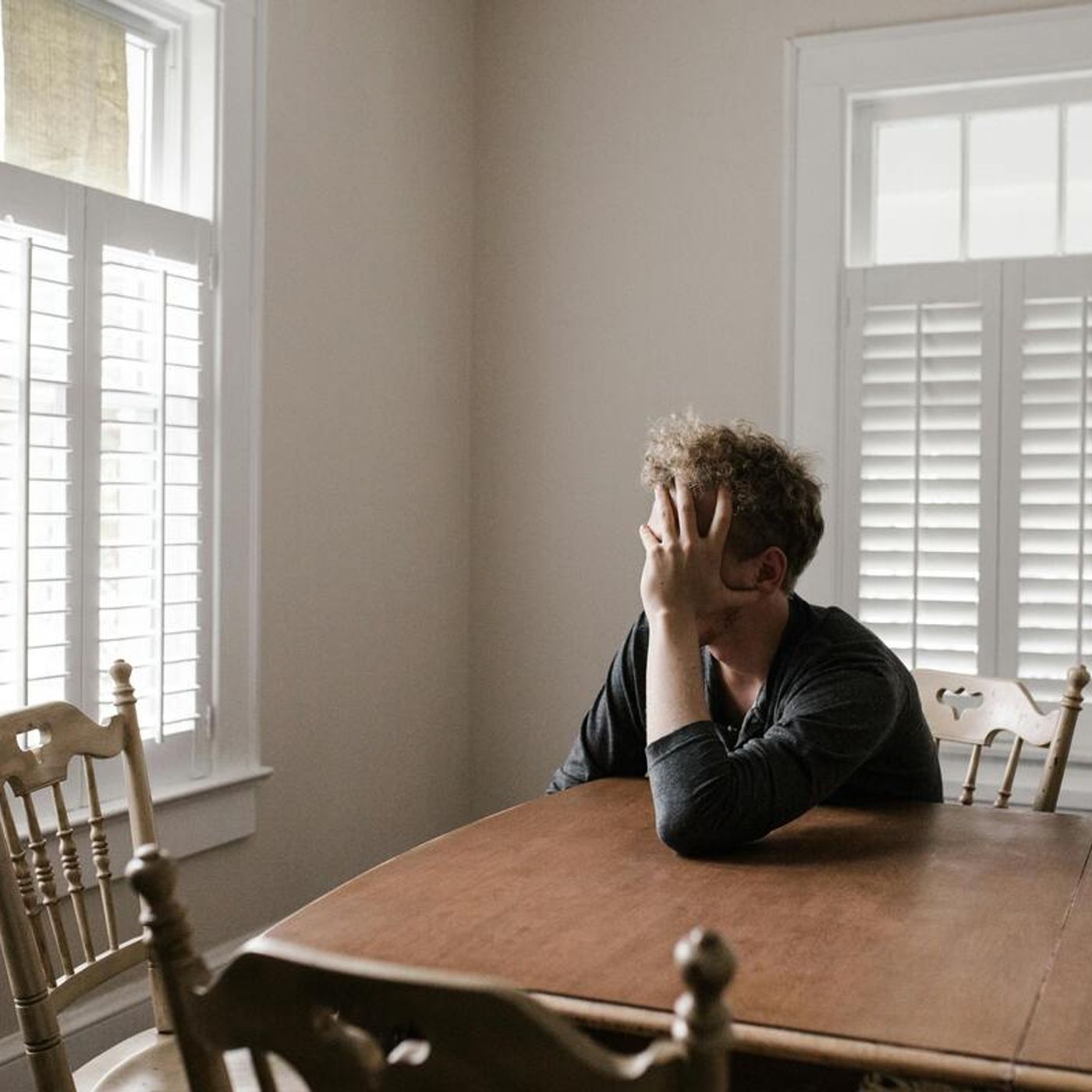
Si tu mayor preocupación no tiene solución, ¿por qué preocuparte? La preocupación y el estrés paralizan a más seres humanos que cualquier otra enfermedad conocida, y los laboratorios científicos sólo nos ofrecen antídotos de consecuencias...

 Apple Podcasts

 Spotify

 Castro

 RSS Feed
Si tu mayor preocupación no tiene solución, ¿por qué preocuparte? La preocupación y el estrés paralizan a más seres humanos que cualquier otra enfermedad conocida, y los laboratorios científicos sólo nos ofrecen antídotos de consecuencias imprevisibles. Pero tú puedes hacer algo distinto a medicarte. Este libro te proporcionará unas técnicas probadas por más de nueve millones de personas de un sistema mundialmente reconocido y de muy fácil aplicación. Te ayudará a canalizar tus energías de forma que puedas controlar tu vida, en lugar de que tu vida te controle a ti.
Si te ha gustado el episodio, también puedes encontrar mis libros en Amazon:
- Libro 1: Libre, saludable y feliz
- Libro 2: 31 días para mejorar tu vida
- Libro 3: Minimalismo para gente normal
- Libro 4: 7 pasos para una vida con propósito
La Mesa Sagrada es una intensa lucha de poder que abarca siglos de historia, desde la España medieval hasta los oscuros días de la Segunda Guerra Mundial. Un hallazgo arqueológico en un pequeño pueblo desencadena una serie de eventos que conectan los secretos de la guerra con antiguas conspiraciones, culminando en un final sorprendente.
Así que, si disfrutáis de este podcast y además os encanta leer novelas de suspense, misterio y aventura, tengo un regalo para vosotros. Al descargar La Mesa Sagrada en Amazon y dejar una reseña, recibiréis uno de mis cuatro libros anteriores, el que prefiráis. Solo tenéis que enviarme un correo a ideasparavivirmejorresumenes@gmail.com con una captura de pantalla de vuestra reseña y el título del libro que queréis recibir.
Conviértete en un seguidor de este podcast:
0:09 Hello everyone and welcome to ideas for a better life. I am Eugenio pallar Ruiz, a hard- working reader, writer and lover of personal development. In today' s episode we will talk about a classic book how to suppress worries and enjoy life. Written by Dailel Carneggi. In the forties of the last century, everyone cares. That is inevitable, but very few people realize the damage that that concern can cause to their health. Overly worrying can make us physically sick. The Greeks knew this thousands of years ago. Plato knew that the mind and body are intimately related and, unfortunately, today, the subjects of concern are everywhere and are especially frequent at work. For example, high- pressure jobs generate more concern and, as expected, also more illnesses than more relaxed jobs. So high levels of stress that today are associated with demanding jobs, can lead people to heart disease. In fact, the book mentions a couple of studies that are obviously old, because this book is from the 1940s, but already then it was said that more than a third of business executives suffered from heart disease, ulcers, stomachs, high blood pressure,
1:46 etcetera. He also mentions another study that says doctors are 20 times more likely to die of heart failure than farm workers than farm workers. So, then, if you have a very stressful job, I' m not telling you to stop today by tomorrow. I tell you to find a way to combat the concern that this work imposes on you so that you can avoid health problems in the future. But why do we care? We worry because we' re confused. It is confusion that is the main cause of concern and to avoid that confusion, what the book proposes is that we analyze all our concerns with three steps. First, we identify the cause of that concern. Second, we analyze the facts. We wonder what we can do about that concern.
2:49 Make a list of your options. Maybe your only option is to run away or explain or act like nothing has happened. That' s the second point in the making, and the third point is making a decision. That ' s where you decide what you' re going to do and you do it. And this is important because once you' ve decided how you' re going to deal with what you' re worried about, do it and don' t look back. It' s very human to be questioning us all the time if we' ve made the right decision. It is very human to constantly ask ourselves whether we have done the right thing, whether we still have time to change our decision, and so on. But once you ' ve analyzed your concern and decided on the course of action, you' ve decided what you' re going to do with it. Be firm.
3:43 It suppresses the anxiety generated by doubts. Don' t go back, don ' t go back to the analysis stage, don' t go back to the starting point. Another very important aspect of eliminating concerns is living in the present. We have said so in a multitude of episodes of this podcast. Worrying about the past or the future makes no sense. All that makes sense is living in the present. This is a little bit. Like boats. Just like ships have water- proof compartments, we need time- proof compartments. What has happened in the past or what may happen in the future cannot and should not interfere with our present. So plan the future if you need to be prepared if you need to, but don' t worry unnecessarily about what' s going to happen. You know what the best preparation for the future is, do your best in the present. You' re not going to be better prepared because you worry more You' re going to be better prepared because you' ve done your best in the present. Yesterday no longer exists as love and tomorrow is not yet born. So you don' t have to worry about one or the other. Focus only on what you can do today, and this does not mean that you will not have problems.
5:17 Then, when you face a problem, accept the worst that could happen and seek improvement. From there, I mean, ask yourself what' s the worst thing that could happen to me? With this problem? That I have writes you what is the worst of cases and accept it that will probably give you more calm than you have right now, because most likely the worst of the cases you can imagine is not so bad. Surely there is a way out, Surely you can recover if, for example, the worst thing that can happen is that you lose your job, because surely writing it you will realize that most likely it is also that you find another one in a short period of time. The idea is that concern is something useless and also that affects our happiness. We must avoid worrying about the bad things that happen to us or that we think will happen to us. The book explains to us a strategy that is that of the Stoblos order that those of you who are familiar with the bag will know what I mean. What the book says is to apply the Stoblos strategy for grudges and concerns. This is a strategy invented by a stockbroker that basically means stopping the loss. I mean, you buy shares at a certain price and then you go looking at how that price evolves.
6:47 If things go wrong, if the stock price gets to a certain point below where you bought it, imagine ten percent below the price you bought them from, then automatically sell them and this prevents the loss from increasing, i e you put a limit on your maximum loss. Hence the name stoplus because with the grudges it works exactly the same. You shouldn' t spend time and energy holding grudges, being angry with someone or ruminating problems. Put out an order. Stoplos in those things that cause you stress and pain, which basically means telling yourself, up to here, so far I worry, so far I get and from here out those things that cause me pain, that cause me stress, that cause me worry. Most people think that their emotions influence the way they think and act. And that' s true. But also, as William James, a famous psychologist, said, this means that our actions and our thoughts also influence our emotions, that is, it is a two- way street. Our emotions influence our thoughts and actions. But our actions can also influence our thoughts and emotions. That is, we cannot directly influence how we feel, but we can indirectly influence how we think and how we act, so to speak in a simpler way. Acting in a
8:24 happy way helps us to feel happier. That is why it is recommended that if you are sad, that you draw a smile on your face, that you sing that you dance, because it is impossible to feel sad when you are acting in a cheerful way, as with thoughts, when you have positive happy thoughts, improve your mood. That is why, Marco Aurelio, who was no idiot, because he was the emperor of the Roman Empire, probably the most important in history, said that our life is what our thoughts make of it. So don' t stop to think, think, cuddle the negative issues around you. Focus on the positive and your life will improve, because, as Marco Aurelio said, your life is what your thoughts make of it. The book also speaks of goodness. When we do something good for someone, when we do an act of kindness, we often do it thinking or waiting for gratitude from others and sometimes having those expectations is probably only going to make you disappointed because people tend to be ungrateful. It is part of human nature and we cannot change human nature. It would be absurd to think we can. And I go back to Marco Aurelio here. He was very
9:56 clear about this point. In fact, in his diary he wrote that selfish, ruinous and ungrateful people were going to be in his life continuously, that he would meet them, but that it neither surprises nor disturbs them, because it is impossible to imagine a world without people. Thus, then, this means that you should not do good deeds, that you should not be a kind person. No, what it means is that you should rejoice in doing the kind act, regardless of the response of others, that you do good things for others without expecting anything, that you don' t do them simply by waiting for gratitude. And another important point to suppress your worries, neither envy nor imitate others. The key is to be authentic. He thinks you ' re unique, that there' s no one like you, that there ' ll never be anyone like you on this planet, because your genes you know are completely unique. And in spite of that, despite all that we are, each of us, many people yearn to be another person because for some reason we like the other, more for others than for good. But we are like this and that makes no sense to live life longing for someone else makes no sense. Why don' t we accept what makes us unique,
11:31 why don' t we feel comfortable with ourselves, accept what makes us special and start to feel better and comfortable with our own nature, because, besides, wanting to be someone else, wanting to be someone you' re not carries a great risk. It can cause you psychological problems, because no one is more unhappy than someone who longs to be someone else. And many times, because we also suffer criticism. True, people sometimes criticize us and the book also tells us how we should manage these kinds of situations. Think the more they criticize you, the more influential you are. We can explain this a little bit. People, human beings, are prone to criticize the people we admire and the people we envy. So don' t take those criticisms as an insult, or as a contempt, take them as a compliment.
12:35 If you' re criticized, normally, that means you' re doing something worthy of mention, something important, something worth it. So the more they criticize you, the better you are, because more influential and more important you will be as a person. And the book also talks about how tired it is to make a book of the forties. There was already talk of tiredness, especially tiredness at work. I' m sure it' s happened to you that after a long hard day at work, you tend to be sadder, and most people when that happens, assume that it' s intellectual work in their office that has worn them out, but not mental work, by itself it doesn' t tire. Scientists have discovered that even after twelve hours, mental work alone is not able to exhaust what exhausts us. So, what exhausts us are negative emotions, it' s boredom, it' s anxiety, it' s the feeling of not being appreciated, of not being valued. And there are few bigger sources of unhappiness in life than having to work day after day, every day, in a job you hate I know, you have a job and you have to keep it because you need the money to live. So, if you' re in that situation, if you already have a job you hate, what you can do is organize
14:09 it in such a way that it doesn' t cause you any more worries. And what I mean by organizing, because I refer you to the episodes about productivity. Having your email inbox full of unanswered emails will generate a lot of worries then, as you don' t like your current work, at least organize yourself in a way that doesn' t generate you, that you have it under control, that you have everything under control so that that part doesn' t slip over and, of course, try in your free time to do everything you can to escape from that nutritional work that you don' t like as soon as possible. But, in the meantime, as long as you have to be there, keep it organized, keep it under control, and don' t make it an additional source of stress. So you already know how to worry can be harmful to your physical health and mental health.
15:03 Find ways to deal with your concerns that are exactly the ways the book gives us Find a little stressful work that you like and as long as you get it. Organise well the one you already have and your worries one by one to make a decision and once you have made that decision, don' t look back. Do it and don' t look back. He lives in the present. He thinks it' s the worst thing that could happen. Don' t waste time and energy holding grudges on. No one acts happily, even if you don' t feel happy, don' t do things waiting for the gratitude of others. Accept what makes you special. He values being the way you are. Don' t want to be someone else and take each other' s criticisms as a compliment, because deep down they are. And now, before saying goodbye, let me remind you that you have at your disposal a compilation of the best ideas about personal development, told in a practical way, as I always try to do in podcasts, in my four own books, you already know them free, healthy and happy, thirty- one days to improve your life, minimalism for normal people and seven steps for a life with purpose. You already know that you have all four on Amazon and that I leave your link in the notes of the episode and if you liked this little one, this little talk, please subscribe, to
16:37 the channel share it on social networks or visit three www ideas to live better. Dot com there you can download free a copy of my last book and without further saying goodbye. Thank you very much. As always and until next time, everything