
La Figura De Baphomet: Desentrañando El Mal En Culturas Y Religiones Historias De Terror - REDE

¡ Rápido ! Suscríbete y activa la campanita.
Se parte de la comunidad REDE.
ENVIAME TUS HISTORIAS A: relatosdesclasificados@gmail.com
SÍGUEME EN FANPAGE: https://bit.ly/33H3Og3
SÍGUEME EN INSTAGRAM: https://bit.ly/3dgiBmd

 Apple Podcasts
 Spotify
 Castro
 RSS Feed
 ¡ Rápido ! Suscríbete y activa la campanita.
Se parte de la comunidad REDE.
ENVIAME TUS HISTORIAS A: relatosdesclasificados@gmail.com
SÍGUEME EN FANPAGE: https://bit.ly/33H3Og3
SÍGUEME EN INSTAGRAM: https://bit.ly/3dgiBmd
0:05 Satan, the figure of Baphomet, also known as Satan Devil, among other names, intertwines in various etymologies that converge in a single concept, evil. In abramic religions, evil personifies itself as a deity, adopting an anthropomorphic form. In Christianity he is represented as a fallen angel, formerly endowed with great piety and beauty, but rebelled against God, resulting in Hell being banished. Thus he becomes the leader and opponent of the kingdom of God. On the other hand, in Judaism, Satan is interpreted as a metaphor of the inclination to evil or as an agent subordinate to God. Within the Christian faith, Satan presents himself as an accuser and adversary, a decidedly malevolent one with evil qualities. He plays an antagonistic role in readings such as the Apocalypse and figures as the one who tried to tempt Jesus Christ in the desert. In the context of theistic satanism, the figure of Satan is seen differently, considering it a positive force and a divinity worthy of worship and veneration. The term Satan has its roots in the Latin Satan, which in turn comes from Hebrew to Satan with possible interpretative translations as an enemy adversary or accuser. In the book
1:37 of numbers he is mentioned as Shattan, a wandering spy of God upon earth. In Israelite legal life, the term Shattan acquires the meaning of accuser before the court and Shitna, derived from the same root, refers to the accusation in the mentality of Hebrews to so is also seen as an angelic being acting as prosecutor in heaven, accusing humans for their sins before God. Their mission involves subjecting people to temptations to expose sin. Satan thus becomes synonymous with perdition, destruction, malice, and the pursuit of evil by men, as is repeatedly evidenced in the Old Testament. The richness of the interpretations and representations of satan throughout the different traditions and currents of thought offers a complex and nuanced view of this figure, which goes beyond simply being the antagonist in a religious account.
2:37 Its role ranges from the personification of evil to the representation of temptation and accusation, making this entity a fascinating and multifaceted element in mythology and theology. The original Hebrew term Satan displays its meaning in an amplitude ranging from the generic accuser or adversary used to refer to conflicts between humans to the designation of a specific supernatural entity. This noun is derived from a verb whose main meaning is to obstruct or oppose, giving the word a rich semantic complexity. When used without the definite article, Satan may allude to any accuser, but with the definite article the focus is on the heavenly accuser. Satan to Satan with the definite article appears in the Masoretic text. The Hebrew version of Tanach officially used among Jews in three significant instances, outlining its irrelevance in the biblical narrative.
3:46 It is interesting to note that the word Satan does not make its entrance into the Book of Genesis, where we only find a talking serpent without a clear identification, with no supernatural n n ns. This detail adds mystery to the initial account, where the figure of the heavenly accuser is not yet manifest. The first time the word Satan emerges in the Hebrew Bible linked to a supernatural entity brings us to numbers twenty- two. Twenty- two. Here, the Angel of Keys confronts Balaham on his donkey, marking a crucial moment where the presence of Satan is revealed in a specific and transcendental context. In addition, some Bible passages offer an implicit description of Satan without using the word itself.
4:39 An example is found in Samuelâ s first two twelve, where Eli â s sons are qualified as sons of Belial, a term that later becomes clearly synonymous with Satan. Likewise, in Samuelâ s first, sixteen, fourteen to twenty- three yave sends a disturbing spy to torment King Saul, revealing the complex relationship between the divine and Satan as a mechanism for congrating with the future King David. A fascinating vision is revealed in Zechariah three one to seven, dated mid- February to five hundred nineteen before Christ. In this vision, Joshua the high priest representing the nation of Judah, with his sins is in judgment before Yagüe with Satan, serving as prosecutor. The narrative highlights divine interaction, where Yahue rebukes Satan and orders Joshua to receive clean clothing, symbolizing divine forgiveness for Judahâ s sins. In the context of Jewish domination in the Achaemenid Empire, a fascinating synergy between Judaism and Zoroastrianism emerged leaving an indelible imprint on Satan' s Jewish conceptions. This narrow bond is manifested through the influence of Angra Mainjou, the golden god asrian or evil, darkness and ignorance over Jewish perceptions. Angra Mainyu, whose name evokes the meaning of tormenting spirit. In the Zoroastrian context, it is presented as the main figure of
6:14 evil, introducing limitations, stains and diseases. This Zoroastrian mythological background significantly influenced Satanâ s Jewish conceptualization, providing a frame of reference that resonated with the beliefs of the time. An intriguing transition occurs in the translation of Satan from Hebrew to Greek. In the Septuagint. In texts such as the Book of Job and Zechariah, the Hebrew word is translated as diabolos, the same word that will later give rise to the term devil in the Greek New Testament. This linguistic connection underscores the continuity in the perception of an adverse entity between Jewish and Christian traditions is during the period of the Second Temple, especially in the apocalypse present in the pseudo Jewish epigraphy, where the figure of Satan acquires new layers of complexity. The notion of Satan as an opponent of God and a purely evil entity is rooted in these texts, providing fertile ground for the development of mythology. A revealing example of this mythology is found in the book of enoch a work that has gained prominence thanks to the manuscripts of the Dead Sea.
7:33 This book, almost as influential as the Torah, tells the story of the vigilantes, a group of two hundred angels charged with supervising the earth. However, these angels, led by Semiatza, abandon their duties to have relations with human women, unleashing sin and corruption in humanity. Asasel' s figure, another member of the watchers, stands out as the propagator of evil among humans. The fall of Semiaza, the rebellious angel and leader of the two hundred, is situated on the top of Mount Hermon, known as Cenir by the Amorites and Sirion by the Phoenicians. These names, present in Hugaritic texts found in Rashambra, Syria and in documents of Coy Turkey bogas, contribute a geographical and cultural dimension to the narrative. The mountain identified as Mount Vallermón already gives a subtle hint of another of the names with which it associates itself with the devil, but that one we will see a little later. Exploring Azazel â s figure leads us to a Hebrew background, where his name reveals a deep symbolology of origin. In Hebrew asasel means the goat of emissary or scapegoat.
8:48 This term is manifested four times in the Bible, specifically in the regulations relating to the annual day of atonement. Untangle the meaning of Azazel implies breaking down its etymology into two words of root makes it denote goat and asel that implies disappearing. This conceptual duality adds layers of meaning to the figure, revealing not only its symbolic nature, but also its connection to sacred rituals. In the panorama of pseudo epigraphy, the figure of Sataniel appears in the second book of Enoch also known as the Slavic Book of Enoch. This text of unknown authorship and uncertain date presents Satan Ael as the prince of the Grigori expelled from heaven, an evil spirit that understands the difference between the righteous and the sinful.
9:46 The complexity of this figure adds nuances to the narrative by exploring the ethical and moral dimensions of heavenly rebellion. In the book of Wisdom we find a reinterpretation of the figure of the devil as the one who brought death to the world, a perspective that initially fell upon them. This connection between the devil and the introduction of death offers an intriguing perspective on the evolution of interpretations over time. The term satan so rooted in popular culture, finds its synonym in English as devil. The latter is the embodiment of evil in various cultures and religious traditions, representing a hostile and destructive force. The word has its origin in the Latin diabolos, which in turn comes from the slandering Greek. The etymology proposed from the protoindoEuropean suggests an adjective that means heavenly or resplendent, highlighting the complexities in the linguistic evolution of this concept. This devil, so well known as Belial and Samael in the Bible, awakens the inner one by its many facets. Belial, a word composed by Blay that means corruption and yal that denotes profit, suggests deep meanings such as corrupt profits, disobedient or rebellious.
11:16 In addition, he is attributed titles as lord of arrogance or lord of pride, as well as the son of hell, evoking a rich imagery that intertwines with mythology and spirituality. Since the Middle Ages, Belial has been considered the prince of hell. The figure of Belial emerges as a central character in various ancient texts and his presence is recorded in the manuscripts of the Dead Sea, specifically in war of the children of Light against the children of Darkness. This prophetic text narrates a cosmic war between good and evil, with Belial being the leader of the children of Darkness. His role as a direct opponent of God is also highlighted in the Apocryphal, the Testament of the twelve Patriarchs, consolidating his figure as the incarnation of evil in the cosmology of the time.
12:11 As the scripture of the Bible resumes in the first century, the term Belial acquires a new dimension by being used as an appellation of Satan. This linguistic transition reflects how interpretations of these mythological figures evolve over time, merging different traditions and attributes into a broader narrative. Inside this complex trimitological tapéz comes Samael, whose name translates as God' s poison or God' s blindness. In such a musical and post- malmudical tradition, Samael plays several roles, being the accuser, the seducer and the destroying angel. In the Midrachic texts he is considered a member of the heavenly hosts, with often grim and destructive functions, highlighting his role as the chief angel of death and head of the satans.
13:05 The richness of Jewish narratives reveals that Samael often appears in the history of the Garden of Eden and is credited with the plan of Adam' s fall and eva with a serpent. In some traditions he is depicted as a fallen angel who plotted the original sin and curiously, he is linked as Cain' s possible father and Lilith' s partner. As angel of the Guardian and prince of Rome, Samael stands as the archenemy of Israel, adding additional layers to his complex identity. In some Gnostic cosmologies Samael is identified with the demiurge, the source of evil and creator of the material world, although these accounts probably originate from the same source. Gnostic development differs from Jewish narrative, where Samael is considered simply an angel and servant of God. The presence of Samael rooted in the period of the second temple and its subsequent destruction unfolds a rich narrative woven into several ancient sources. His first mention is linked to the book of Enoch where he emerges with other rebellious angels, marking the beginning of his role in the mythological fabric. The Greek apocalypse of barug, an apocryphal text of the Old Testament, projects Samael as the preeminent evil figure here. His connection with the temptation of Adam and Eve takes shape as he plants the tree of knowledge and, after his banishment and curse for God, seeks vengeance leading
14:39 mankind to sin in the ascension of isaiah. Samael presents himself as the very incarnation of evil, consolidating his status as an influential cosmic entity in the Rabbah exodus. His role as accuser in the Heavenly Court and tempter of sins is accentuated while Michael emerges as a defender of Israel' s actions. Samael' s identification with Satan adds layers of complexity, where Satan becomes a title describing his accusing function. While Samael is recognized as his own name, his role as Angel of Death, manifests at the time of taking Moses' soul, consolidating his position as leader of satans. Texts describing him as a twelve- winged seraphim underline his heavenly nature, revealing an image of power and majesty in the cabal. Samael acquires an additional facet by being associated with God' s severity, highlighting his connection with divine aspects. The rich diversity of interpretations and mythology expands by exploring evil representations in other cultures and religions. Unlike Abrahamic Triad, Christianity, Judaism and Islam, where the devil is commonly understood as a fallen angel or demon, other traditions present similar entities, but with different nuances.
16:10 In Buddhism, for example, the figure of Mara arises, the obstacle to the enlightenment of the Buddha Sidartaha Gautama, personifying resistance against the destruction of the ego. In Hinduism, the association of samael with Iama or called God of Death highlights significant differences, since Yama is not perceived as a demonic entity, but rather as the lord of the spirits of the dead and guardian of the underworld. Pre- Columbian cultures, like the Inca, present the supa and as an intriguing and ambivalent figure, marked by syncretism that associates her with both the Christian Devil and the venerable Lord of the Depths or Salamanca. In this context, unlike the repudiation of the Devil in the n Christian culture, the indigenous did not reject him, but, fearing him, invoked him and worshiped him to avoid his harm, revealing a complexity in the relationship between deity and those who revered her. With the arrival of Christianity and the Gospels, the supai acquires a more personal character, being considered an enemy of Christ, an antichrist. This change in the perception of deity highlights the cultural and religious influence that the arrival of new beliefs had on interpretations of pre- existing entities.
17:33 In the Arabic language, the figure of the devil is named as Shaitan, a term that, by implication, also means serpent. This link with the serpent resonates with mythological and religious narratives of various traditions, adding a layer of symbolic complexity to the figure of the devil. Exploring Canaanite mythology, Eilel the god of the planet Venus emerges, whose name can be translated as this morning. In Latin, this term becomes lucifer or Luzbel. This connection between Lucifer and the planet Venus is also reflected in the goddess Sumeria and Nana, associated with that planet. Inana' s myths, especially his descent into the underworld, present fascinating parallels with the Devil' s narratives, illustrating how mythological concepts can transcend cultures and epochs. Perhaps this may be the origin of Satan being shown in some representations with some female factions. Canaanite mythology also introduces us to Baal and, derived from his name, Baalzebub arises, which evolves towards Beelzebub This deity. In his allegorical representations he assumes colossal forms, with threatening features, cuckolds and bat wings. In Christian literature, Beelzebus is used to designate the primer of demons, a practice rooted in the ancient Hebrew custom of
19:03 representing other people' s deities in an evil way. In Solomon' s Testament he deepens the figure of Belzebub, mentioning that he was enslaved by Solomon and that under his command he had all the demons Belzebub had at his command to build the temple of Jerusalem. This account adds an intriguing nuance to mythology, connecting the figure of the devil with specific events and giving him a role in the construction of a sacred place. In the context of Christianity, Lucifer emerges as the prince of demons, a fallen angel who before his descent bore this name and who subsequently adopts the title Satan or Satan. This change of names symbolizes his rebellion and fall from his original angelic state. The Arabic equivalent of Satan is known as Shaitan, one which, in addition to being an adjective applicable to both man and Gyan, is used specifically in reference to Satan.
20:07 In the Koran, the figure of Satan is named after Iblis, possibly derived from the Greek word Diabolos. Satanâ s Islamic view differs from that of Christians, since they do not regard him as the cause of evil, but rather as a tempter who takes advantage of human inclinations toward egocentrism. The Quran tells of the moment when God commands all angels and Iblis to bow down to the newly created Adam. While all angels obey, Iblis refuses to proclaim his superiority by being made of fire compared to Adam, made of clay. This disobedience leads to his expulsion from paradise and his condemnation of Yahannahm as a place of purification for the wicked marking the beginning of his role as ungrateful unbelieving Kafir, whose mission is to divert humanity. Satanâ s distinctive feature, in addition to his arrogance and despair, lies in his ability to suggest evil to men and women. The coran in the sura fifteen forty- five points out that Satan has no influence over the righteous, but exercises his power over those who fall into error. Immunity from Satanâ s temptations is presented as a reward for those who obey the divine laws in the coroner. Satan describes himself as a particular angel who shares similarities with the Gian beings, who could
21:37 be understood as the known geniuses of the lamps. In popular culture. This duality raises debates among Muslim exegetes who do not agree on themselves. Satan is a fallen angel or leader of a group of evil geniuses adding layers of interpretation to the complexity of this figure in the Islamic worldview. Islamic belief holds that Iblis, known as Satan, was created by God from fire. However, during the first two centuries of Islam, the history known as satanic verses was widely accepted by Muslims. According to this narrative, Satan deceived Muhammad into adding words to the Koran that would allow Muslims to pray for the intercession of pagan goddesses, confusing Satanâ s words with divine inspiration. The Islamic doctrine of birth also includes teaching that newborns weep because Satan touches them during childbirth, which supposedly predisposes them to sin. This idea has similarities with the doctrine of original sin. In other religious traditions. The exception to this evil influence would be Jesus and Mary, who, according to Muslim tradition, were not touched by Satan at birth in the NS spectrum of names associated with the devil Mephistopheles is another worthy mention. The etymology of his name suggests that he does not love
23:08 light. Mephistopheles. In literary tradition he presents himself as a tragicomic figure caught between his victory by displacing God as the center of all things and his defeat by losing relevance. For the same reason, visually mephistopheles is represented in lavish robes of nobility and a cool rational and logical mind that they use to mentally trap people and manipulate their actions. Having explored the various names of the devil and his etymological characteristics, it is essential to address the concept of fallen Angel. In the Gospel of Salucas, Jesus claims to have witnessed the fall of satan from heaven, adding a theological dimension to the figure of the fallen angel in the Christian tradition. This event represents the rebellion and separation of satan from his original angelic state, marking the beginning of his role as an adversary to God and humanity. An epic narrative detailing a monumental heavenly battle is displayed in chapter twelve of the Book of Revelation. In this account, an army of rebellious angels led by the imposing seven- headed Red Dragon faces forces led by the Archangel Michael and his loyal angels. This conflict culminates in the defeat of the rebellious angels, who are exiled from heaven. The symbolism present in this passage is intriguing, especially when describing the Red Dragon dragging a third of the
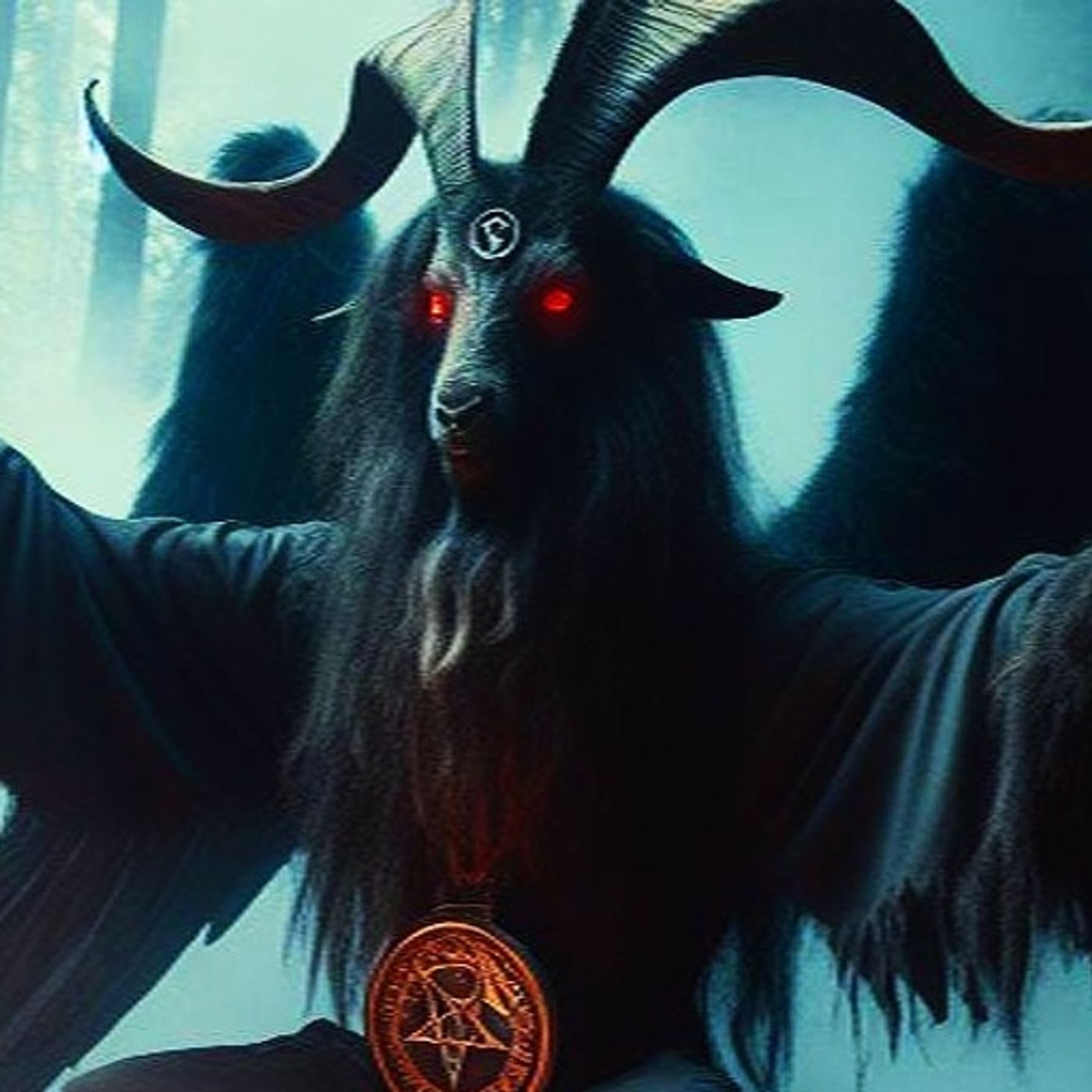
24:44 stars in the sky with its tail. Biblical scholars interpret this symbolism as a representation of the rebellious angels, those who participated in the struggle and were expelled from heaven. This image evokes a rnd the majestic and cosmic, where the celestial forces are confronted in an epic battle that defines the destiny of these entities. It is fascinating to see how these entities, associated with pure evil, share physical descriptions common in various traditions. The presence of tails, horns and goat legs in the representations of malevolent figures transcends cultural and religious boundaries. These symbolic elements intertwine in the narrative of evil, creating an archetypal image that endures throughout various interpretations and artistic representations. These physical descriptions shared among malignant entities suggest the existence of cultural archetypes rooted in the collective psyche. The presence of common elements in the representations of evil throughout the different traditions highlights the universality of certain symbolic concepts. This phenomenon reveals how cultures, despite their differences, have converged in the creation of images and symbols that encapsulate the essence of evil. The symbolic fabric surrounding the representations of malevolent entities in various cultures is as vast as
26:18 it is intriguing. These figures, associated with different animals, acquire multifaceted meanings that reveal the complexity of cultural and religious beliefs throughout history. The ram, for example, stands as a duality in Christian culture. His horns incarnate the devil, while his figure also represents the lamb of God, symbol of peace. This duality reflects the richness of symbolic interpretations within the same figure. The raven linked to superstition becomes a dominant entity in some cultures due to its black plumage and its association with death. However, in the biblical narrative, these birds play a divine role in providing the prophet Elijah during his confinement by Keritzi Creek. In the case of the Wolf, his symbolism experienced a dichotomy between the medieval era, where he represented evil, and the Greco- Roman tradition, where he embodied the god Zeus and was associated with the protection of rowing and rowing. This contrast shows the ability to reinterpret symbols over time and in different cultures. The black cat during the Middle Ages was linked to the devil and witchcraft, but in ancient Egypt these felines were considered sacred and protective against evil spirits. This duality highlights how the same entity can be perceived in an
27:48 opposite way in various traditions. The dragon, on the other hand, shows remarkable diversity in its symbolism. In medieval Christian art, he represents the ocation, but in other cultures, such as China, he is a sacred figure associated with wisdom and fortune. This diversity underlines the versatility of symbols in different cultural contexts. The serpent, inspired by genesis, is a universal symbol of sin and temptation in the Jewish Christian tradition. However, in the Far East the serpent acquires a positive connotation, being considered sacred and protective against negative energies.
28:30 These varied interpretations reveal how symbols acquire complex and often contradictory meanings throughout cultures and ages. As we delve into the complex fabric of religious interpretations, we find a controversial topic that some authors have boldly addressed throughout history, the proposal to consider the God of Abraham as the devil himself. This defiant notion has been espoused by several religious thinkers, who argue that the Biblical God, instead of being a benevolent force, is an entity that inflicts suffering, death and destruction, directing mankind towards acts of violence and genocide. These provocative writings do not hesitate to use forceful terms referring to the God of Abraham as the devil god. This expression encapsulates the essence of criticism, suggesting that the divine actions described in the tanach the Jewish sacred text are imbued with evil, even becoming compared to the figure of the Devil. Criticism focuses primarily on the God of the Old Testament, finding a marked contrast with the perception of a true God that, according to these authors, is revealed in the New Testament. Here lies the dichotomy, a god that for some manifests itself as benevolent and loving in New Testament Christianity, while in the tanach it is attributed actions that critics consider evil or even diabolical. To support their arguments, these authors dive into
30:08 the Bible passages by carefully selecting those who describe divine actions that, according to them, are morally questionable. It is through these fragments that they build their narrative by presenting a god who, in his interpretation, is not only the creator and guide, but also a being who can be perceived as the promoter of acts that go against human ethical and moral principles. This critical approach not only challenges traditional interpretations of divinity, but also invites deep reflection on the nature of faith and morality. By entwining criticism through the exploration of specific passages, these authors seek to question deep- rooted perceptions and offer an alternate native perspective on the Divine character, thus marking a controversial chapter in theological interpretation. Tale written and adapted by Ramiro Contreras